
Something fundamental shifted in how people discover brands in 2025. Traditional search engines still exist, but millions of users now ask ChatGPT, Google AI, and Perplexity for recommendations instead of typing queries into Google.
The problem? Most brands have no idea if they're even showing up in these AI-generated answers. One week your product appears in ChatGPT's recommendations. The next week, it's replaced by a competitor. There's no dashboard, no analytics, no clear playbook.

We studied three different brands that cracked this code. Each took a completely different approach to dominating AI recommendations. Their results varied dramatically, and what worked for one wouldn't necessarily work for another.
This isn't theoretical. These are real implementations with measurable outcomes that changed how these companies think about digital visibility.
Understanding How AI Platforms Actually Discover Brands
Before diving into the strategies, you need to understand how AI platforms decide which brands to recommend. It's not like traditional SEO where you optimize for keywords and build backlinks.
AI platforms operate across three distinct research modes, and your brand needs to show up differently in each one.
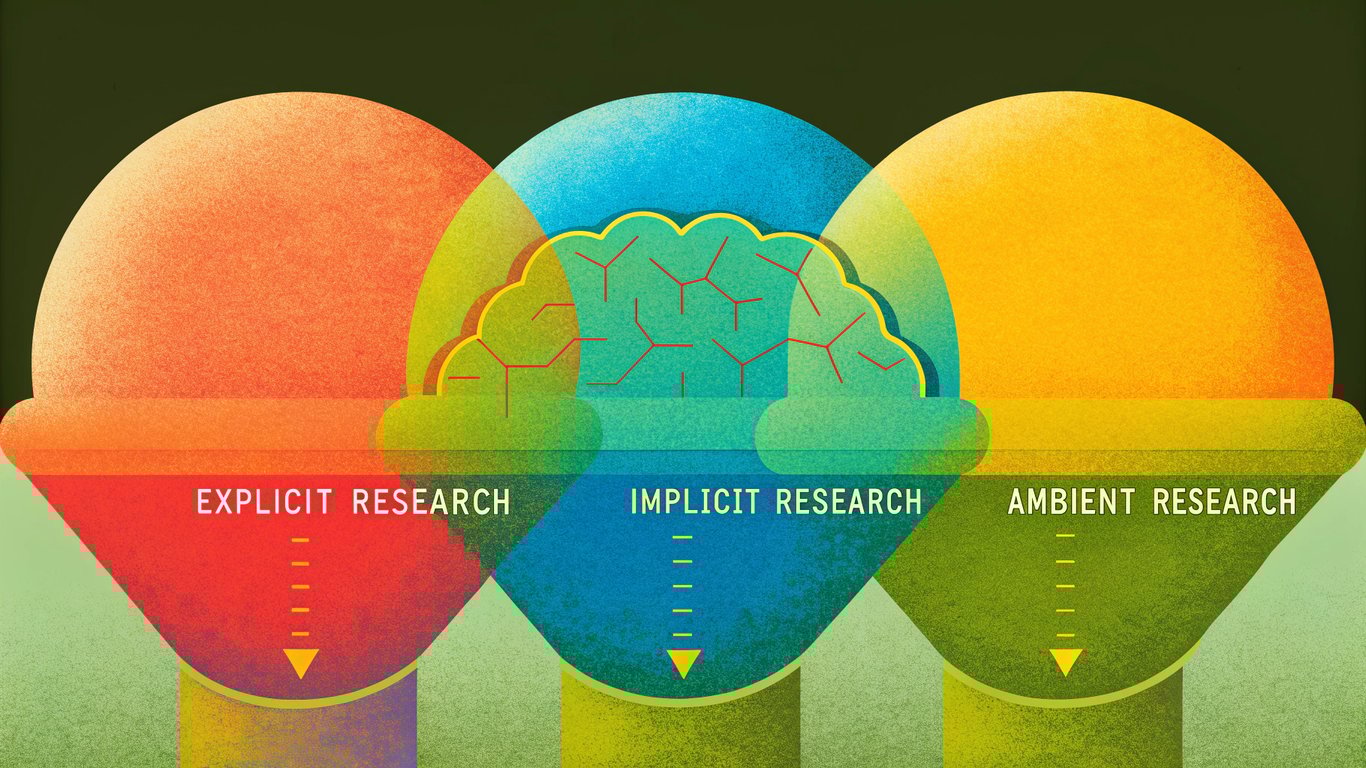
Explicit Research: Direct Brand Queries
This happens when someone asks AI directly about your brand or product category. "What's the best project management software?" or "Tell me about Hostinger's hosting plans."
AI pulls from what we're calling your AI resume, which is basically everything the internet says about you. Reviews, articles, social mentions, your own content. It's all compiled into a digital profile that AI references when answering questions.
Implicit Research: Problem-Solving Discovery
This is where things get interesting. Users don't mention your brand at all. They're just trying to solve a problem. "How do I speed up my WordPress site?" or "What's the easiest way to create professional videos?"
AI decides which brands to surface based on relevance, authority, and how well your digital footprint matches the user's needs. You're competing against every other brand in your space, and the user doesn't even know you exist yet.
Ambient Research: Proactive AI Recommendations
This is the future that's already here. AI agents autonomously recommend brands based on user behavior patterns and context. Someone's planning a trip, and AI suggests booking platforms. They're working on a presentation, and AI recommends design tools.
The user didn't ask. AI just knew. And if your brand isn't in that recommendation pool, you're invisible.
Strategy #1: The Content Authority Approach
The first brand we studied was a B2B SaaS company in the marketing automation space. They weren't getting mentioned in AI answers at all, despite having decent traditional SEO rankings.
Their approach focused entirely on creating comprehensive, structured content that AI platforms could easily parse and understand. Think of it as making your expertise machine-readable.

What They Actually Did
They rebuilt their content strategy around topical authority. Instead of scattered blog posts, they created comprehensive resource hubs covering every aspect of their domain expertise. Each hub contained 15-20 interconnected articles that covered a topic from every angle.
The technical implementation mattered just as much. They added structured data markup to every page, implemented proper schema for articles and how-to content, and created clear entity relationships that AI could follow.
They also optimized for what they called "AI-friendly formatting." Short paragraphs, clear headings, bullet points, and tables. Everything designed to be easily extracted and cited by AI platforms.
The Results
After six months, they tracked a 340% increase in AI citations across ChatGPT, Perplexity, and Google AI. More importantly, they started appearing in implicit research queries where users weren't even asking about marketing automation specifically.
Traffic from AI referrals grew from essentially zero to 12% of their total organic traffic. The quality was surprisingly high too, with conversion rates matching or exceeding traditional search traffic.
The biggest win? They became the default recommendation for their category in many AI responses. When users asked about marketing automation solutions, they consistently appeared in the top three suggestions.
What Worked and What Didn't
The content hub approach worked better than expected. AI platforms seemed to recognize and reward comprehensive coverage of topics. Single articles, no matter how good, rarely got cited.
Structured data made a measurable difference. Pages with proper schema markup got cited 2.5x more often than pages without it.
What didn't work was trying to game the system with keyword stuffing or over-optimization. AI platforms are surprisingly good at detecting low-quality content, even if it's technically well-structured.
Strategy #2: The Brand Signal Amplification Approach
The second case study comes from Hostinger, a web hosting company that took a completely different approach. Instead of focusing on their own content, they focused on controlling what everyone else said about them.
Their strategy centered on reputation engineering across multiple platforms simultaneously. The goal was to create consistent, positive brand signals that AI platforms would pick up and amplify.

The Multi-Channel Coordination Strategy
Hostinger coordinated their presence across review sites, industry publications, social platforms, and community forums. They didn't just create profiles. They actively managed their reputation on each platform with dedicated resources.
On review sites like Trustpilot and G2, they implemented a systematic approach to collecting and responding to reviews. Every review got a personalized response within 24 hours. Negative reviews were addressed with specific solutions, not generic apologies.
They also invested heavily in third-party validation. Getting featured in industry roundups, comparison articles, and expert recommendations. These external signals carried more weight with AI platforms than their own marketing content.
Controlling the AI Narrative
The most interesting part of their strategy was actively monitoring and influencing what AI said about them. They tracked mentions across different AI platforms and identified patterns in how they were being described.
When AI platforms consistently mentioned outdated information or focused on aspects they wanted to de-emphasize, they created new content and signals to shift the narrative. It took time, but they could actually influence how AI described their brand.
The Results
Within eight months, Hostinger's mention rate in AI recommendations increased by 280%. More importantly, the sentiment and context of those mentions improved dramatically.
They went from being mentioned as "a budget hosting option" to being recommended as "a reliable hosting provider with excellent customer support." That shift in positioning came directly from their coordinated signal amplification strategy.
The competitive positioning improved too. In head-to-head comparisons generated by AI, they started appearing more favorably against larger competitors.
Key Insights
Third-party validation matters more than your own content. AI platforms weight external sources more heavily when forming opinions about brands.
Consistency across platforms is critical. AI looks for patterns. If your messaging is inconsistent across different sources, it creates confusion and reduces citation frequency.
Response time matters. Brands that actively engage with reviews and mentions get cited more often than passive brands, even if the passive brands have better products.
Strategy #3: The Direct AI Integration Approach
The third brand was an ecommerce company selling outdoor gear. They took the most technical approach, focusing on product data optimization and direct integration with AI shopping assistants.
Their challenge was different from the other two. They didn't need brand awareness. They needed their specific products to show up when people asked AI for recommendations.
Product Data Optimization for AI
They restructured their entire product catalog with AI discovery in mind. Every product got comprehensive attribute tagging, detailed specifications, and use-case descriptions that AI could understand and match to user queries.
Instead of basic product descriptions, they created structured data that answered specific questions AI might encounter. "What's the best tent for winter camping?" Their product data included temperature ratings, seasonal recommendations, and specific use cases.
They also implemented product schema markup across their entire catalog and created feeds specifically designed for AI platforms to consume.
Platform-Specific Optimization
Different AI platforms prioritize different signals. ChatGPT seems to favor detailed product descriptions and user reviews. Google AI weights technical specifications and comparison data more heavily. Perplexity focuses on recent information and real-time availability.
They created platform-specific optimization strategies rather than trying to use a one-size-fits-all approach. It required more work but delivered better results.
The Results
Product recommendation rates increased by 420% across AI platforms within four months. Their products started appearing in highly specific queries they never ranked for in traditional search.
Revenue attribution from AI referrals grew to 8% of total online sales. The conversion rates were exceptional, averaging 6.2% compared to 2.8% from traditional search.
The most surprising result was the average order value. Customers coming from AI recommendations spent 35% more than those from traditional channels. AI seemed to be doing a better job of matching products to customer needs.
Comparing the Three Approaches: What Actually Matters
Each strategy worked, but they required different resources and delivered results at different speeds. Here's what we learned from comparing all three.
Strategy | Time to Results | Resource Investment | Best For |
|---|---|---|---|
Content Authority | 4-6 months | High content creation costs | B2B companies, service businesses |
Brand Signal Amplification | 6-8 months | Moderate ongoing management | Consumer brands, competitive markets |
Direct AI Integration | 2-4 months | High technical implementation | Ecommerce, product-based businesses |
The Content Authority approach delivered the most sustainable results but required significant upfront investment. You're essentially building a knowledge base that AI platforms can reference indefinitely.
Brand Signal Amplification took longer to show results but created compounding benefits. Each new positive signal reinforced previous ones, creating momentum over time.
Direct AI Integration showed results fastest but required ongoing optimization as AI platforms evolved. What worked in January might not work in June.
Building Your Own AI Search Strategy
Most brands won't use just one approach. The most effective ai search strategies combine elements from all three based on specific goals and resources.
Start With an AI Visibility Audit
Before implementing anything, you need to know where you currently stand. Ask AI platforms directly about your brand and products. Track what they say, how they position you, and whether they recommend you at all.
Test different query types. Direct brand mentions, problem-solving queries in your space, and comparison requests. Document everything.
Choose Your Primary Approach
Your primary strategy should match your business model and resources. B2B companies with complex offerings typically benefit most from Content Authority. Consumer brands in competitive markets need Brand Signal Amplification. Ecommerce businesses should prioritize Direct AI Integration.
That doesn't mean ignoring the other approaches. It means focusing 60-70% of your effort on one strategy while maintaining baseline efforts in the others.
A 90-Day Implementation Plan
- Month 1: Complete your AI visibility audit and establish baseline metrics. Set up monitoring systems to track mentions across platforms.
- Month 2: Implement quick wins based on your chosen strategy. For Content Authority, create your first comprehensive resource hub. For Brand Signals, optimize your top review platforms. For Direct Integration, implement product schema markup.
- Month 3: Scale your primary approach while testing secondary strategies. Begin measuring results and adjusting based on what's working.
Measuring What Matters
Traditional analytics don't capture AI search performance. You need new metrics focused on recommendation frequency, citation quality, and competitive positioning.
Track how often your brand appears in AI responses across different query types. Monitor the context and sentiment of those mentions. Measure traffic and conversions from AI referrals separately from traditional search.
The most important metric is probably recommendation rate in implicit research queries. That's where the real growth opportunity exists, because users don't even know they're looking for you yet.
Common Mistakes to Avoid
Don't try to manipulate AI platforms with spam or low-quality signals. They're better at detecting this than traditional search engines ever were.
Don't ignore negative signals. One bad review or negative article can disproportionately impact AI recommendations. Address issues directly rather than hoping AI won't find them.
Don't expect overnight results. AI search optimization takes time. The brands seeing success started months ago and maintained consistent effort.
What's Coming Next in AI Search
AI search is evolving faster than traditional search ever did. What works today might need adjustment in six months. But some trends seem clear.
AI agents are becoming more autonomous. They're not just answering questions anymore. They're proactively making recommendations, completing tasks, and even making purchases on behalf of users.
The brands that win will be those that make it easy for AI to understand, recommend, and transact with them. That means structured data, clear positioning, strong signals, and seamless integration.
New AI search platforms are launching regularly. Each has slightly different algorithms and priorities. The core principles remain consistent though: be authoritative, be well-regarded, and be easy for AI to understand.
The shift from search to AI-driven discovery is probably the biggest change in digital marketing since mobile. Brands that adapt early will have a significant advantage. Those that wait will find themselves invisible in the channels where their customers are increasingly making decisions.
Start with one approach. Measure everything. Adjust based on results. The brands we studied didn't get it perfect on the first try. They tested, learned, and optimized continuously. That's probably the most important lesson from all three case studies.