
Your brand could be invisible to the fastest-growing search channel on the internet right now. While you've spent years optimizing for Google's traditional search, AI systems like ChatGPT, Perplexity, and Google's AI Overview are fundamentally changing how people discover brands. And they're not using the same playbook.
These AI platforms don't just crawl and rank pages. They synthesize information from multiple sources, evaluate credibility signals, and present recommendations based on patterns that traditional SEO barely touches. If your brand isn't structured for AI discovery, you're missing conversations with potential customers who never even make it to a search results page.
How AI Systems Surface Brand Information Differently

Traditional search engines show you a list of links. AI systems have conversations and make recommendations. That's a massive shift in how brands get discovered.
When someone asks ChatGPT for software recommendations or queries Google's AI Overview about industry solutions, these systems pull from structured knowledge bases, cross-reference multiple authoritative sources, and evaluate contextual relevance in ways that go beyond keyword matching. They're looking for entities, not just pages. They're validating claims through multiple mentions across trusted sources. They're analyzing sentiment and topical authority.
Your brand needs to exist as a recognized entity in these systems, not just as a collection of web pages hoping to rank.
Why Traditional Brand Awareness Tactics Fall Short
Most brand awareness strategies still focus on impressions, reach, and traditional SEO metrics. You're tracking social media followers, monitoring keyword rankings, and measuring website traffic. But AI systems don't care about your follower count.
They care about structured data that helps them understand what your brand actually does. They care about whether authoritative sources mention you in relevant contexts. They care about whether your brand information is consistent across platforms so they can validate it. Traditional tactics like buying display ads or optimizing meta descriptions don't directly influence whether an AI system will recommend your brand when someone asks for solutions in your category.
You need an AI-first approach that builds the signals these systems actually use to evaluate and surface brands.
Understanding AI Signals and Brand Visibility
Before diving into tactics, you need to understand what AI systems are actually looking for when they decide whether to mention your brand.
Key Signals AI Systems Prioritize
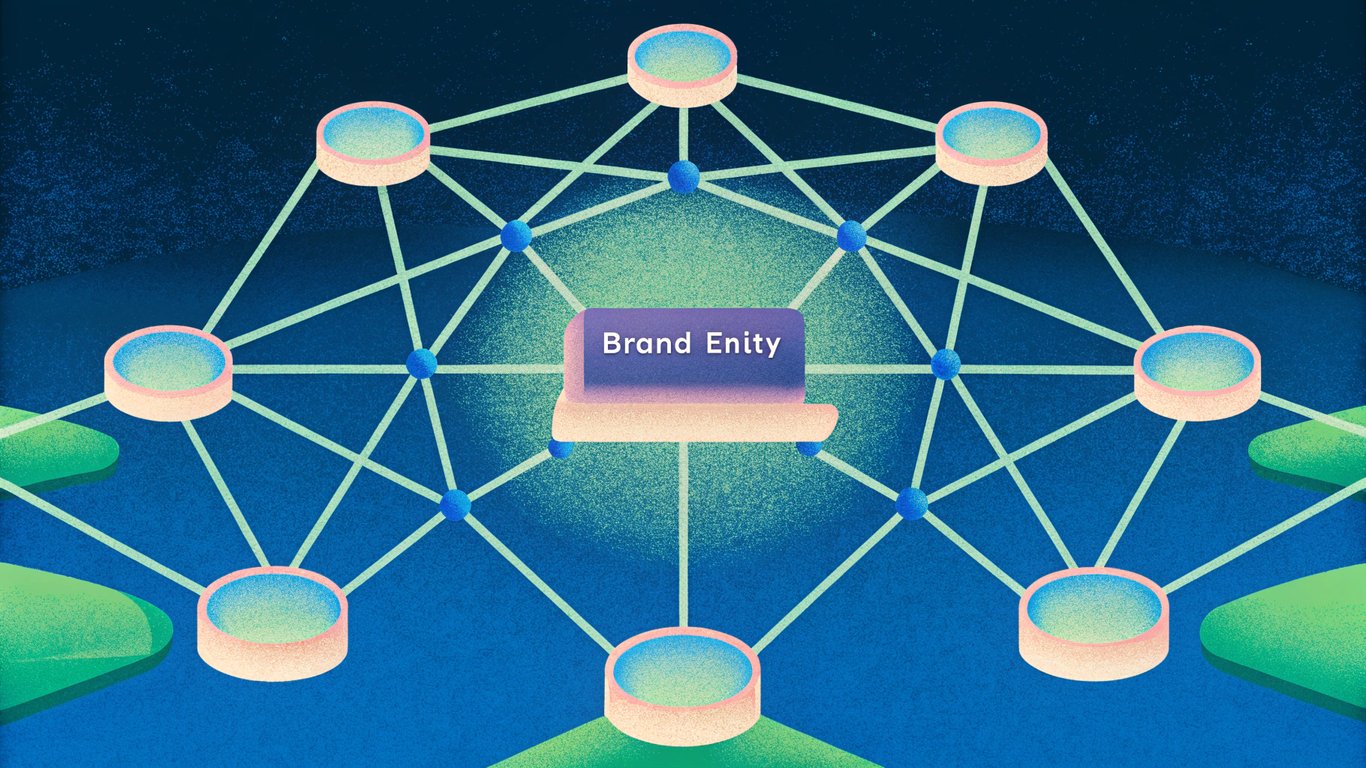
AI platforms evaluate brands through several core signals. Entity recognition comes first. Your brand needs to exist as a distinct entity in knowledge graphs, not just as text on web pages. This means having structured data that clearly defines what your company is, what it does, and how it relates to other entities in your industry.
Cross-source validation matters tremendously. When multiple authoritative sources mention your brand in similar contexts, AI systems gain confidence in your legitimacy and relevance. A single mention on your own website means little. Mentions across industry publications, review sites, and trusted platforms create a pattern AI can recognize.
Topical authority signals show AI systems that you're not just present in a space but actually knowledgeable about it. This comes from comprehensive content that covers topics in depth, demonstrates expertise, and gets referenced by others in your field.
Sentiment analysis influences whether AI systems feel confident recommending you. Positive mentions, satisfied customer signals, and constructive discussions about your brand all contribute to how AI platforms perceive your reputation.

How to Improve Brand Awareness in AI Search Results
Improving brand awareness in AI systems requires a different mindset than traditional marketing. You're not trying to game an algorithm or stuff keywords. You're building a comprehensive digital presence that AI can understand, validate, and confidently recommend.
This means creating machine-readable structure around your brand identity. It means earning mentions in contexts that matter. It means demonstrating genuine expertise that other sources will reference. The tactics that follow give you a practical roadmap for building each of these elements.
Optimize Your Digital Brand Foundation
Your brand's technical foundation determines whether AI systems can even understand who you are and what you do. These first five tips focus on the structural elements that make your brand discoverable and comprehensible to AI.
Tip 1: Implement Comprehensive Schema Markup and Structured Data
Schema markup is how you tell AI systems exactly what your brand represents. Without it, AI has to guess based on unstructured text. With it, you're providing clear, machine-readable definitions of your organization, products, and relationships.
Start with Organization schema on your homepage and about page. Include your official name, logo, founding date, contact information, and social media profiles. Add Product schema for your offerings with detailed descriptions, categories, and features. Use Brand schema to establish your brand identity as a distinct entity.
The more structured data you provide, the easier it is for AI systems to understand your brand's place in the market and surface you in relevant contexts.
Tip 2: Create and Maintain a Robust Knowledge Graph Presence
Knowledge graphs are the databases AI systems use to understand entities and their relationships. Getting your brand into Google's Knowledge Graph and Wikidata gives AI platforms authoritative sources to reference when they need information about your brand.
For Google's Knowledge Graph, claim and optimize your Google Business Profile if you have a physical location. Create a Wikipedia page if your brand meets notability guidelines. For Wikidata, you can create an entry yourself by providing verifiable information with citations to reliable sources.
These knowledge graph entries become the foundation AI systems use to validate and understand your brand across different contexts.
Tip 3: Optimize Your Brand's Entity Associations
AI systems understand brands through their associations with topics, industries, and other entities. You want to strategically build these connections so AI platforms know when to surface your brand.
Consistently mention your brand alongside relevant industry terms, use cases, and problem categories across your content. If you're a project management tool, you want AI to associate your brand with terms like team collaboration, workflow automation, and productivity software. Create content that explicitly connects your brand to the problems you solve and the categories you compete in.
These associations help AI systems understand when your brand is relevant to a user's query, even if they don't mention your name specifically.
Tip 4: Develop AI-Readable Brand Documentation
Your About page shouldn't just be marketing copy. It should be a comprehensive, structured document that AI systems can parse to understand your brand story, mission, products, and positioning.
Write clear, factual descriptions of what your company does, who it serves, and what problems it solves. Use headers to organize information logically. Include founding information, key milestones, and leadership details. Create separate pages for product documentation that explain features and use cases in straightforward language.
Think of this content as your brand's instruction manual for AI systems. The clearer and more comprehensive it is, the better AI can represent you accurately.
Tip 5: Establish Consistent NAP and Brand Mentions Across Platforms
AI systems validate information by cross-referencing multiple sources. If your Name, Address, and Phone number (NAP) are inconsistent across platforms, it creates confusion and reduces AI's confidence in your brand information.
Audit every platform where your brand appears. Your website, social profiles, business directories, review sites, and any third-party listings should all use identical formatting for your brand name and contact information. Even small variations like "Inc." versus "Incorporated" can create validation issues for AI systems.
Consistency signals legitimacy and helps AI systems confidently aggregate information about your brand from multiple sources.
Create Content That AI Systems Value and Surface
Content remains critical for AI visibility, but the type of content that matters has shifted. AI systems prioritize depth, authority, and usefulness over keyword optimization.
Tip 6: Publish Authoritative, Citation-Worthy Content
AI systems look for content that other sources reference and cite. This means creating original research, publishing industry data, conducting case studies, and sharing expert insights that provide genuine value to your field.
Original research gets cited. Industry surveys get referenced. Comprehensive guides become resources that others link to. When AI systems see your content being used as a source by authoritative sites, it signals that your brand produces valuable, trustworthy information.
Focus on creating content that answers questions definitively enough that other sites will reference it rather than recreating the information themselves.
Tip 7: Optimize for Natural Language and Conversational Queries
People don't talk to AI systems the way they type into search boxes. They ask full questions in natural language. Your content needs to match this conversational style.
Structure content around questions people actually ask. Use headers that mirror natural queries like "How do I choose the right project management software?" rather than keyword-stuffed phrases like "Project Management Software Selection Guide." Write answers in clear, direct language that AI can easily extract and present to users.
The more your content matches how people naturally ask questions, the more likely AI systems will surface it in conversational responses.
Tip 8: Build Topic Clusters That Demonstrate Expertise
AI systems evaluate topical authority by looking at the breadth and depth of your content coverage. A single great article doesn't establish expertise. A comprehensive ecosystem of related content does.
Create pillar pages that cover core topics exhaustively, then build supporting content that explores subtopics in detail. Link these pieces together to show AI systems the relationships between topics and demonstrate that you've covered a subject comprehensively.
This clustered approach signals to AI that you're not just creating content, you're building genuine expertise in specific areas.
Tip 9: Leverage Multimedia Content with Proper Metadata
AI systems are increasingly multimodal, meaning they process video, audio, and images alongside text. But they need metadata to understand this content.
Add detailed transcripts to videos and podcasts. Use descriptive alt text for images. Include structured metadata that explains what multimedia content contains and how it relates to your brand. This makes your content accessible to AI systems that might otherwise skip over it.
Multimedia content with proper metadata gives you more opportunities to appear in AI-generated responses across different content types.
Tip 10: Implement E-E-A-T Signals Throughout Your Content
Experience, Expertise, Authoritativeness, and Trustworthiness aren't just Google concepts. AI systems evaluate these signals to determine whether content is credible enough to reference.
Include detailed author bios with credentials. Cite sources for factual claims. Link to authoritative references. Show your work by explaining how you arrived at conclusions. Demonstrate first-hand experience with the topics you cover.
These signals help AI systems feel confident that your content is reliable and worth surfacing to users seeking accurate information.
Build Strategic Brand Mentions and Digital PR
External validation matters more in AI systems than traditional search. Third-party mentions signal that your brand is legitimate and noteworthy.
Tip 11: Secure High-Authority Backlinks and Brand Mentions
AI systems use mentions across authoritative sites to validate brand information and assess relevance. A mention in an industry publication carries more weight than a hundred mentions on low-quality directories.
Focus on earning mentions in publications that AI systems recognize as authoritative in your industry. This might include trade publications, respected news outlets, industry analysis sites, and established review platforms. Quality matters far more than quantity.
Each high-authority mention creates another data point AI systems can use to understand and validate your brand's position in the market.
Tip 12: Cultivate Thought Leadership Through Expert Contributions
Thought leadership creates multiple touchpoints where AI systems encounter your brand in authoritative contexts. Guest articles, podcast appearances, expert quotes, and speaking engagements all contribute to your brand's visibility in AI systems.
When you contribute expert insights to industry publications or appear on relevant podcasts, you're creating content that AI systems can discover and associate with your brand. These appearances signal expertise and increase the likelihood that AI will surface your brand when users ask about topics in your domain.
The more places AI systems encounter your brand providing valuable insights, the stronger your authority signals become.
Tip 13: Monitor and Manage Brand Sentiment Across Digital Channels
AI systems analyze sentiment when evaluating whether to recommend brands. Negative sentiment patterns can reduce your visibility even if you have strong technical signals.
Use brand health tracking tools to monitor how your brand is discussed across social media, review sites, forums, and other platforms. Address negative feedback constructively. Encourage satisfied customers to share their experiences. Build a pattern of positive sentiment that AI systems can detect.
Managing sentiment isn't about hiding criticism. It's about ensuring the overall pattern of discussion around your brand is constructive and positive.
Track, Measure, and Optimize AI Visibility
You can't improve what you don't measure. These final tips focus on tracking your AI visibility and continuously optimizing your approach.
Tip 14: Implement AI-Specific Brand Tracking and Analytics
Traditional analytics don't capture AI visibility. You need specific methods to track when and how your brand appears in AI-generated responses.
Regularly query AI platforms with relevant questions in your industry and track whether your brand appears in responses. Monitor brand mentions in Google's AI Overview results. Track citation patterns to see which of your content pieces AI systems reference most frequently.
This manual tracking gives you insights into which tactics are actually improving your AI visibility and which need adjustment.
Tip 15: Create a Continuous Optimization Framework
AI systems evolve constantly. Your optimization efforts need to be ongoing rather than one-time projects.
Establish quarterly audits of your structured data, knowledge graph presence, and content quality. Test different approaches to see what improves AI visibility. Stay informed about updates to major AI platforms and adjust your tactics accordingly.
Building AI visibility is a continuous process of testing, measuring, and refining your approach based on what actually works.
Putting It All Together
These 15 tips probably feel overwhelming if you're starting from scratch. You don't need to implement everything at once. Start with the foundation, then build systematically.
90-Day Action Plan for Quick Wins
Focus your first 90 days on high-impact foundational work. Implement Organization schema on your key pages. Audit and fix NAP consistency across all platforms. Create or update your comprehensive About page with structured information. Claim your Google Business Profile if applicable.
These foundational elements give AI systems the basic information they need to understand and validate your brand. They're relatively quick to implement and create immediate improvements in how AI can process your brand information.
Long-Term Strategy for Sustained AI Visibility
After your foundation is solid, shift to ongoing content creation and relationship building. Develop your topic cluster strategy. Start publishing citation-worthy research. Build relationships with industry publications for thought leadership opportunities.
Assign clear ownership for different aspects of your AI visibility strategy. Someone needs to own structured data maintenance. Someone needs to manage content creation. Someone needs to track brand mentions and sentiment.
Make AI visibility part of your regular marketing rhythm rather than a separate initiative.
Common Pitfalls to Avoid
Don't abandon traditional SEO while building AI visibility. The two strategies complement each other. Don't try to manipulate AI systems with spam tactics or fake mentions. AI platforms are sophisticated enough to detect and penalize these approaches.
Don't expect overnight results. Building AI visibility takes time because you're establishing authority and validation across multiple systems and sources. Don't neglect consistency. Inconsistent information across platforms undermines all your other efforts.
The brands that succeed in AI visibility are those that commit to building genuine authority and providing real value rather than looking for shortcuts.
Future-Proofing Your Brand for AI-Driven Discovery
AI search is still evolving rapidly. The platforms we use today will probably look different in six months. But the fundamental principles behind these 15 tips remain constant: AI systems need structured information, authoritative validation, and genuine expertise to confidently surface brands.
Start implementing these tactics now, even if you can only tackle a few at a time. The brands that begin building AI visibility today will have significant advantages as these platforms become the primary way people discover solutions.
Your competitors are probably still focused entirely on traditional search. That gives you an opportunity to establish authority in AI systems before your market becomes saturated. The question isn't whether to optimize for AI visibility. It's whether you'll start now or wait until you're playing catch-up.